Thursday, 16 May 2013

Dal Venables- DMV Architecture


Dal Venables has run DMV Architecture for a number of years in Port Elizabeth South Africa. As a young architect, he has made a success of himself and a good name within the industry. The story of his success within the industry, from his university days is inspirational and moving.

At the end of my first year of study, I was fortunate enough to work at DMV Architecture over the December recess. After one month working at DMV Architecture I was able to go back to university, with knowledge and a short experience of work which changed my perspective on architecture completely.

Dal venables is an architect with integrity, vision, enthusiasm and a work ethic that has established his practice to where it is today. The humility and morals of this architect are inspiring and are part of the reason why he is where he is today.

The architecture industry needs more architects and designers with these qualities.
Bridge Street building.


DMV Architecture website http://www.dmvarchitecture.co.za/#team

Wednesday, 15 May 2013

Cape Dutch Home-Graaff Reinet

It has been argued that architects' taste is in stark contrast with the rest of society. A career or aspiration which is not related to the built environment is often perceived by architects as a stereotype in taking for granted what good architecture is.

From another perspective, the over analytical habits of an architect or designer can result in drudging company for someone who is not related to the built environment.

It is important however, for society to appreciate good architecture and not to be alluded to the sham of pretentiousness which is often used to satisfy the tasteless greed of certain individuals in the upper class.

The image above is a house in Graaf Reinet which is well maintained. This is a good example of good architecture which can be appreciated by architects and designers as well as the general public. This design is honest and tells a story of it's time, when the style of Cape Dutch architecture was popular.

An architect's taste and perception of their built environment are very different to the general public. What is just as important, is for the public to be able to identify what is sublime and what is pretentious in the built environment, in order for the places where we live and work to be better environments.

Thursday, 2 May 2013

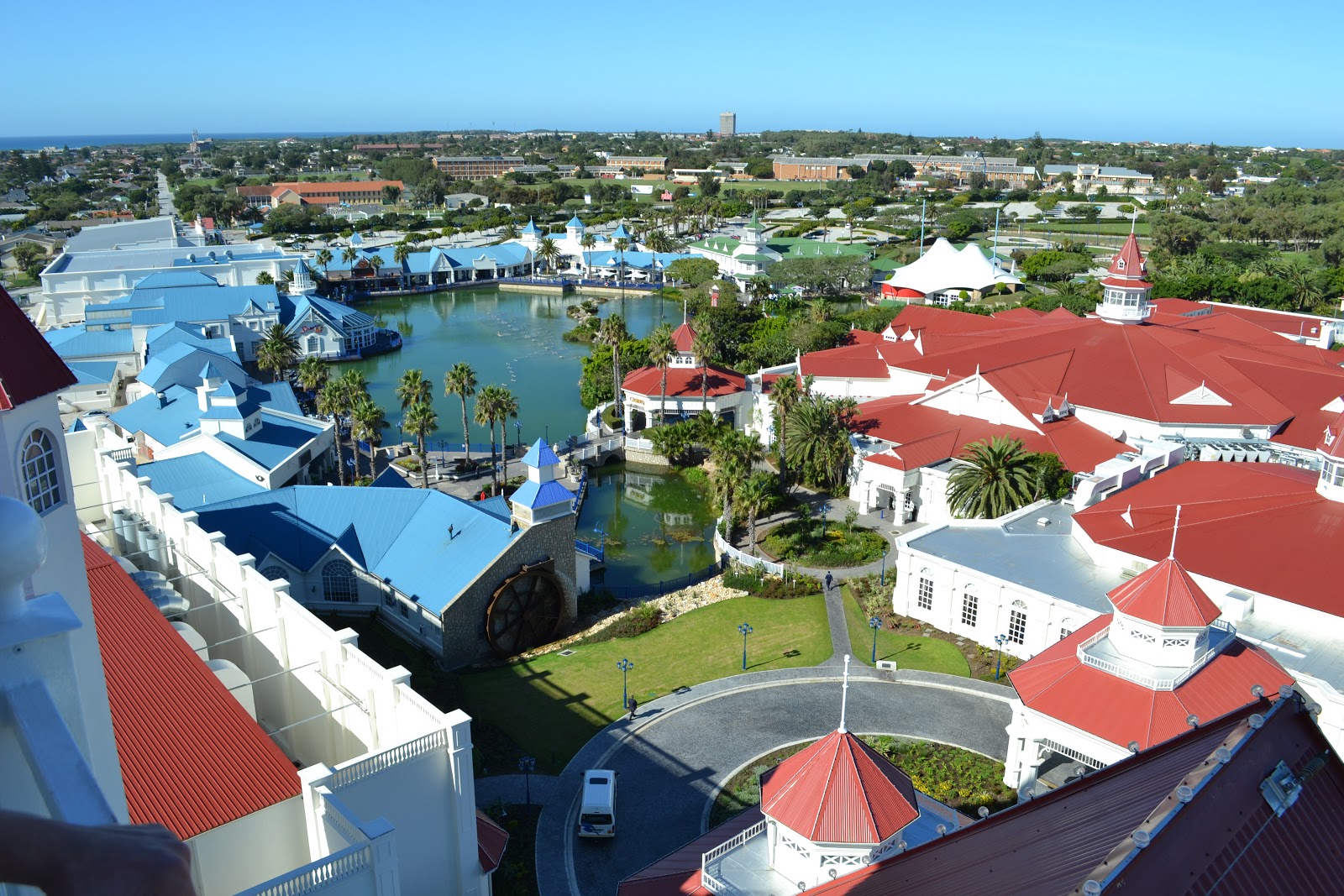
The Boardwalk Hotel

The Boardwalk Hotel was recently completed in Port Elizabeth South Africa. The Hotel is situated behind the existing Caltex petrol station. The Hotel is to serve the rest of the Boardwalk, which consists of the casino, a number of restaurants, shops, food stores as well as many other functions all placed around the lake.
The building has been designed to fit in with the "Disney Land" aesthetic, initially introduced when the boardwalk was first designed. The hotel stands high above the existing buildings to it's immediate surroundings and the rest of the Boardwalk.

A concern to many is the lack of honesty in the form. The towers which are large volumes with no usable space within the volume. The elements used to give an illusion of a door, but are in fact not doors at all, but purely decorative.

The counter argument would be that the decorative elements are an implied detail to the aesthetic of the Boardwalk as a whole, and that the intension, which is to create interest and mystery as to what their functions are is successful. Although many may not appreciate the decorative aesthetic, the intention is met.

Although the implied decoration has it's own argument within the problem which was addressed in the hotel's design when it was initially built, an unfortunate reality is the large volumes of space with beautiful views which were left unusable and became purely service zones.

The argument of decorative against rational is one that can continue well beyond the Boardwalk design. The design may bring a lot of new problems with it, but as designers and architects, we need to be optimistic with the future in order to have any positive impact in the environments we give character to.

Wednesday, 1 May 2013

The Controversy in the Use of Metaphors in Design


In a lecture held at NMMU (Nelson Mandela Metropolitan University) recently, a topic was raised about the concerns related to the use of metaphors in design. The approach to a specific problem, related to the site, context, climate and the brief is often an approached with a metaphorical under-lying meaning.

The concerns raised in the lecture were whether or not this specific approach to design was at all relevant and appropriate. The use of a metaphor to explain a concept often does not answer the questions which the problem asks. Architects and designers have to respond to many problems on site, on a micro and a macro scale of site conditions. In addition to the site conditions, the brief has to be responded to, as well as the context, the culture of the area and many other problems that have to be identified.

In the lecture, the conclusion was that the use of metaphors in design can be used, but only where relevant and appropriate.

The topic has raised additional concerns however. There are architects in South Africa who spend the majority of their lectures on a specific design speaking about the metaphor and not the problem or the response. "There are architects who spend hours talking about a leaf," was a statement made by the guest speaker, giving an example of the irrelevant use of metaphors. The design needs to respond to the opportunities and constraints at many levels, and appropriateness is important in these responses.

Architecture can be very opinionated and what can be a very well resolved design, can also raise additional concerns to many speculative individuals. The argument is often what decides whether or not a design is appropriate.

The approach to design needs to be appropriate, and the designer or architect needs to identify the issues and respond to them in this manner. Should the metaphor be a valid argument and have the level of appropriateness required, that metaphor may be a good response.

Monday, 29 April 2013

Habitat ITESM Leon / SHINE Architecture + TAarquitectura

http://www.archdaily.com/269846/habitat-itesm-leon-shine-architecture-taarquitectura/

Mapungubwe Interpretation Center- Peter Rich Architects

 
The deesign of the interpretation centre by Peter Rich Architects, is one that respects vernacular and responds to it's context well.
 
According to Designboom, the design was formed from the dramatic geological events which took place at the Limpopo River, when the river changed it's course from flowing into the atlantic ocean to discharging into the indian ocean.


The complex landscape was the inspiration for the complex geometric design.
 

An equalateral triangle in plan creates the ordering of the primary structures which are anchored to their locations. The arches are kept thin by timbrel vaulting construction. These thin arches are an analogy of the past generations of cultures indigenous to the area.
The path is dramatic, linking the building's internal volume to the trees and the lanscape as one progresses through the building. The route continues through the building to the highest point of the site where there is a view of Mapungwe, with the Limpopo in the distance.


Tuesday, 23 April 2013

Limion software


http://www.youtube.com/watch?v=xHbxe4iriqo
This new software is a gaming software which is being used by many archgitects in Port Elizabeth. This software is extremely fast and user friendly for 3d illustrations and walk-throughs. This new software can help bridge the gap between architect and client, as there often seems to be a gap between the designer and client.